Key Elements of a BBS:
-
Observation:
- Employees observe each other performing tasks and identify both safe and unsafe behaviors.
- Observations are often done using a checklist that covers key safety practices. -
Feedback:
- Observers provide immediate, constructive feedback to the person being observed.
- Positive reinforcement is given for safe behaviors, while unsafe behaviors are discussed with suggestions for improvement. -
Data Collection:
- Observations and feedback are recorded and analyzed to identify trends in behavior.
- Data is used to target specific areas for improvement or training. -
Continuous Improvement:
- BBS is an ongoing process, not a one-time event.
- Regular review of observation data helps organizations to continuously improve their safety practices -
Employee Involvement:
- BBS programs are most effective when all employees are involved.
- Employees at all levels are encouraged to take part in observations, feedback, and decision-making related to safety.
Benefits of BBS:
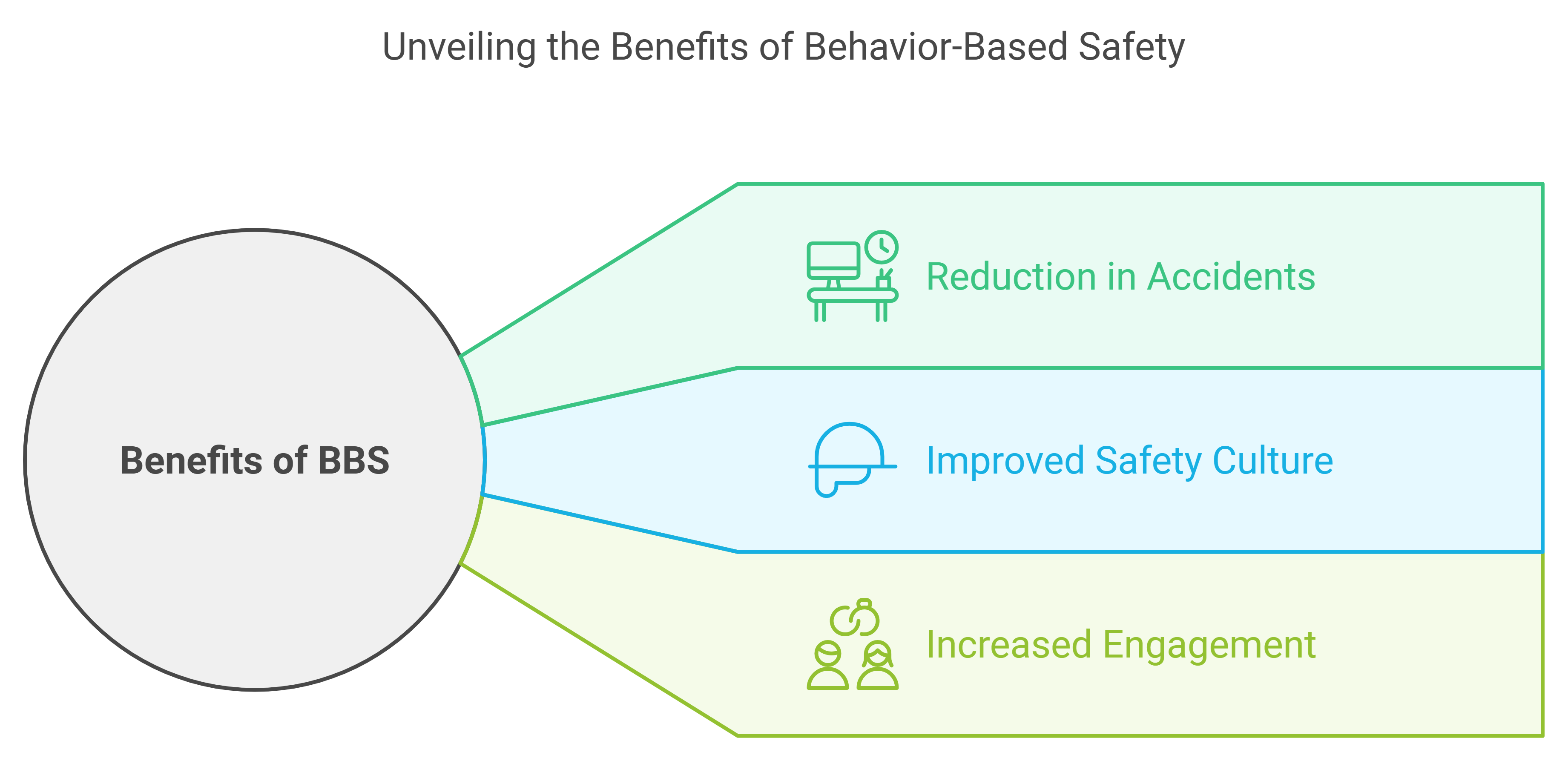
Reduction in Accidents: By focusing on behaviors,
BBS can lead to a significant reduction in workplace accidents and injuries.
Improved Safety Culture: BBS promotes a culture of
safety where employees take responsibility for their own and others' safety.
Increased Engagement: Involving employees in safety
observations and feedback increases their engagement and commitment to safety.
Implementation of BBS:
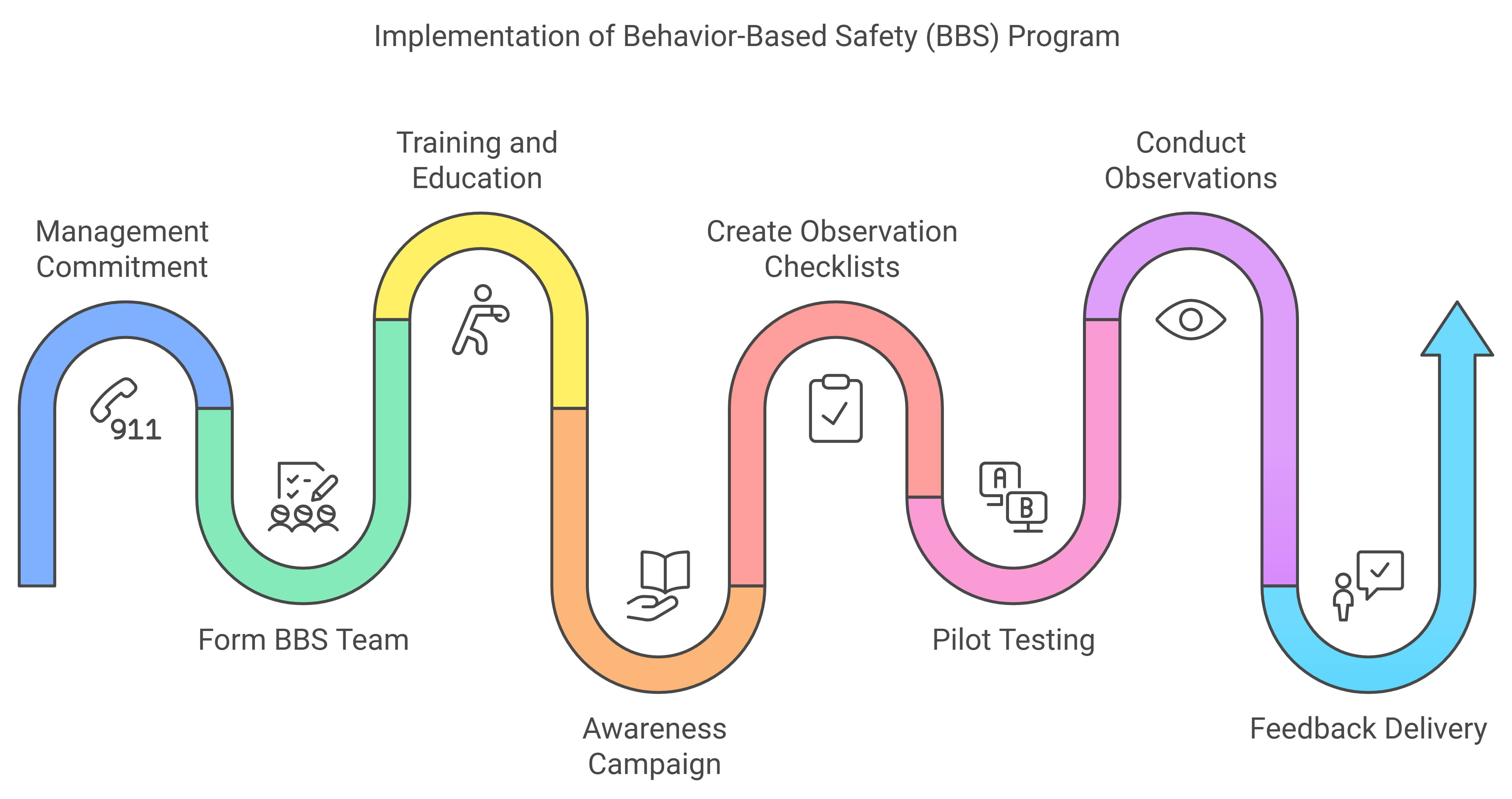
Implementing a Behavior-Based Safety (BBS) program involves several key steps to ensure its effectiveness and sustainability. Below is a detailed guide to help you get started:
-
Preparation and Planning :
Management Commitment:- Secure buy-in from top management. Their commitment is crucial for providing the necessary resources and creating a culture that values safety. Communicate the importance of the BBS program to all levels of the organization.
Form a BBS Team: - Create a cross-functional team to lead the BBS implementation. This team should include representatives from management, safety professionals, and workers from various departments. The team is responsible for designing the program, developing observation checklists, and ensuring consistent application across the organization. -
Training and Education:
BBS Training: Train all employees on the principles of BBS, emphasizing the role of behavior in safety performance. Specific training should be provided to the BBS team and observers on how to conduct observations and provide feedback effectively.
Awareness Campaign: Launch an awareness campaign to introduce the BBS program, its goals, and how it will operate. Use posters, meetings, and other communication channels to keep safety top of mind. -
Developing the Observation Process:
Create Observation Checklists: - Develop checklists that are specific to your workplace and cover key behaviors that impact safety.
- The checklist should include both safe behaviors (to reinforce) and unsafe behaviors (to correct).
Pilot Testing: - Conduct a pilot test of the observation process in a specific department or area to identify any issues and make necessary adjustments. -
Implementation:
Conduct Observations: - Begin the formal observation process. Observers should watch their peers as they work, noting both safe and unsafe behaviors.
- Observations should be done regularly, but not so frequently that they become a burden.
Feedback Delivery: - After an observation, the observer should provide immediate feedback.
- Feedback should be positive, reinforcing safe behaviors, and constructive, addressing unsafe behaviors with suggestions for improvement. -
Data Collection and Analysis:
Record Observations: - Ensure that all observations are documented. This can be done using paper forms or digital tools.
- Collect data systematically to track trends and measure the effectiveness of the program.
Analyze Data: - Regularly review the data to identify patterns, such as frequently observed unsafe behaviors or areas where improvement is needed.
- Use this data to make informed decisions about training needs, process changes, or other interventions. -
Continuous Improvement:
Review and Adjust: - Periodically review the effectiveness of the BBS program and make adjustments as needed.
- Update checklists, refine observation techniques, and ensure that the program evolves to meet the changing needs of the workplace.
Celebrate Successes: - Recognize and reward individuals or teams that consistently demonstrate safe behaviors or contribute to the success of the BBS program.
- Celebrating milestones can help sustain enthusiasm and commitment to the program. -
Sustainability:
Embed in Culture: - Ensure that BBS becomes part of the organization's culture, rather than a temporary initiative.
- Continuous training, communication, and management support are key to sustaining the program over the long term.
Regular Audits: - Conduct regular audits of the BBS program to ensure that it remains effective and aligned with organizational goals.
- Use audits to identify areas for further improvement and to keep the program fresh and relevant.
Common Challenges and Solutions:
Resistance to Change: - Some employees may
be resistant to the new focus on behaviors. Overcome this by involving
them early in the process and demonstrating the benefits of the program.
Observer Bias: - Ensure observers are well-trained
to avoid bias in their observations. Regular calibration meetings
can help standardize the observation process.
Maintaining Momentum: - Keep the program dynamic
by continuously communicating its successes, updating training, and involving
new employees.
Implementing a BBS program is a significant commitment, but it can lead to substantial improvements in workplace safety.